People searching for the most expensive LEGO minifigures will find different lists when one source uses completed sales and another displays current asking prices. The most valuable entries in brick’em’s published ranking tend to be event exclusives, promotional releases and unusual variants with collector demand. On October 2, 2026, its first ten entries ranged from $1,009 to $4,590. The publisher says its list uses six-month average prices from completed BrickLink sales across 19,551 figures. These are useful research clues, not a guaranteed price for the figure in your hand.
This guide separates the ranking snapshot from the way collectors check a real market value. First identify the precise catalog version. Then compare like-for-like new or used examples and look at completed sales as well as active listings. If you have a figure in a mixed collection, a close character match is only a starting point; a different torso print, helmet or accessory can point to another entry entirely.
10 most valuable LEGO minifigures in a public 2026 ranking
The table reproduces the first ten names and values from brick’em’s 100 most valuable LEGO minifigures ranking, checked on October 2, 2026. The source says the ranking uses six-month average prices from completed BrickLink sales. This page records that published snapshot; it does not independently recalculate the underlying transactions. Check the source again before using a number because its ranking and values can change.
| Rank | Minifigure shown by source | Source-listed value (USD) | What to verify |
|---|---|---|---|
| 1 | Mr. Gold, Series 10 without stand or accessories (col161) · 2013 | $4,590.42 | Confirm the Series 10 figure and whether the stand or accessories are included. |
| 2 | Iron Man, Model 37 Armor, Toy Fair exclusive (sh0027) · 2012 | $2,800.00 | Check the exclusive variant, print details and authenticity evidence. |
| 3 | LEGO Universe Bob, LUP Denver (gen164) | $2,255.33 | Confirm the promotional figure and any event or provenance details. |
| 4 | Yoda, New York “I ♥” torso with white hair (sw0465a) · 2013 | $2,188.00 | Match both the torso print and hair version; a similar Yoda is not the same entry. |
| 5 | Shadow Leonardo (tnt001) · 2012 | $1,781.09 | Check the character variant, included parts and condition. |
| 6 | C-3PO, Chrome Gold 30th Anniversary Edition (sw0158) · 2007 | $1,693.88 | Verify the chrome-gold version rather than another gold-colored C-3PO. |
| 7 | Green Arrow with hood, San Diego Comic-Con 2013 exclusive (sh0138) · 2013 | $1,500.00 | Confirm the hooded figure and exact catalog number. |
| 8 | Boba Fett, Cloud City with printed arms and legs (sw0107) · 2003 | $1,465.47 | Check the full Cloud City print variant, cape, helmet and completeness. |
| 9 | Resistance Bomber Pilot, Finch Dallow (sw1005) · 2019 | $1,198.01 | Confirm the correct pilot figure and all matching equipment. |
| 10 | Quatro Boy with lime shirt and blue pants (qtr001) · 2006 | $1,009.08 | Compare the shirt, trousers and included parts to the catalog entry. |
These numbers help prioritize what to inspect, but they should not be copied into a listing as a promise of what a particular copy will sell for. The ranking explains its six-month completed-sale method, but the list does not display a transaction count or a matched condition note beside every figure. A figure sold without accessories is not a direct comparison for a complete copy. Keep the name, catalog ID, source, condition and check date together so the estimate remains traceable.
Why limited figures can command high estimates
A high ranking usually reflects a combination of restricted distribution and strong collector demand. A convention release may have had a narrow route to market. A promotional figure may have appeared at one event or store. A character variant may have a distinctive print that was never widely reused. These details can reduce the number of comparable examples, while a popular theme gives more buyers a reason to search for them.
The first entries in the ranking illustrate different paths to scarcity: a Series 10 collectible figure, an event-exclusive Iron Man, a promotional LEGO Universe figure and licensed character variants. They are not interchangeable categories. A figure produced for a promotion can be hard to find yet attract few buyers; a popular character can have many releases, with only one version receiving a premium.
Catalog IDs help separate those cases. The ID in the table is a compact clue, not proof that a loose figure is genuine or complete. Compare its torso front and back, head, legs, headgear and special parts with a trusted catalog entry. If one piece does not match, pause before using the high-value comparison.
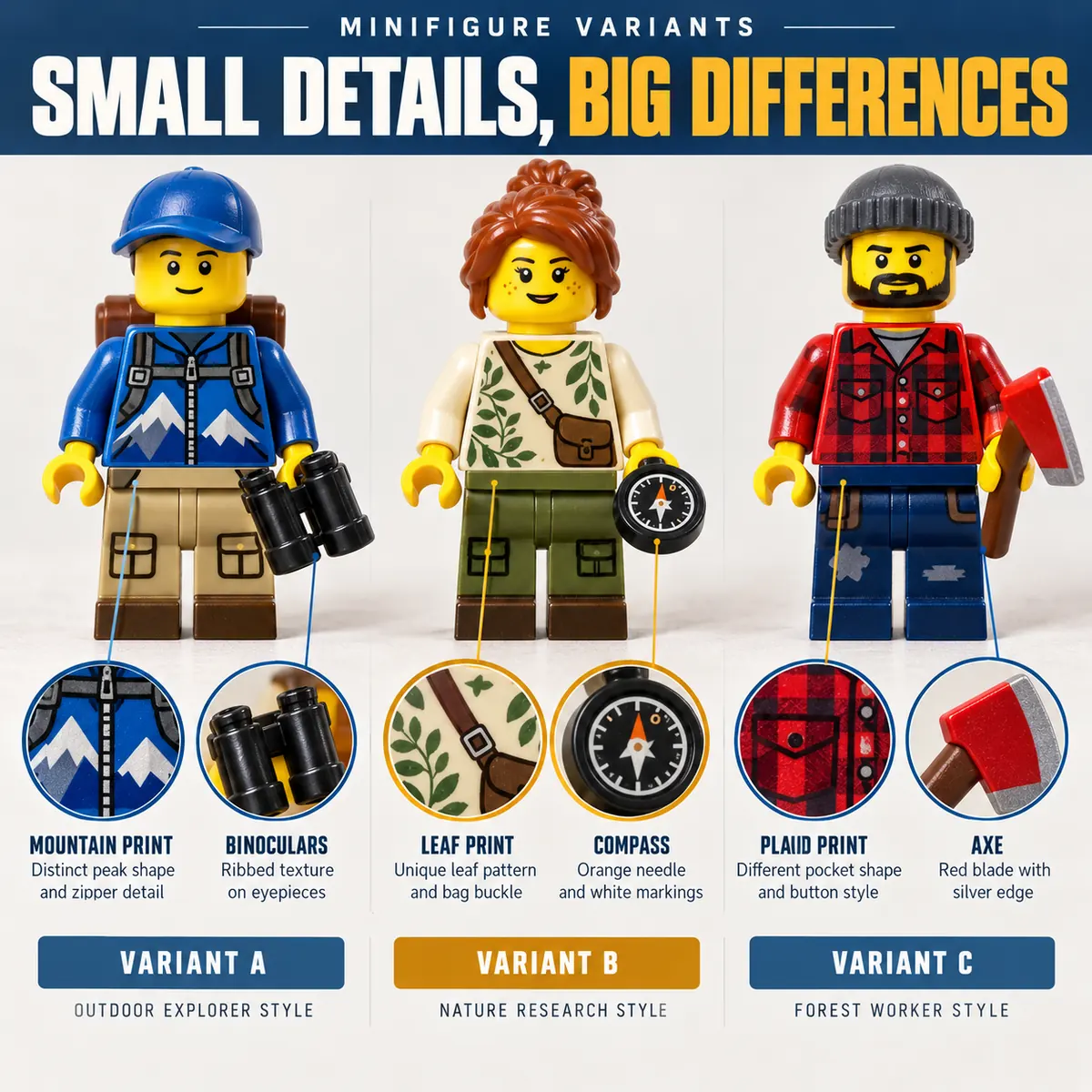
Why rare LEGO minifigures are not always the most valuable
“Rarest LEGO minifigures” and “most valuable LEGO minifigures” sound like the same list, but rarity rankings may measure catalog appearances or how many collectors own a set. That describes scarcity in a database. A price ranking is trying to describe money changing hands or a model of what an item is worth. Scarcity can support a higher price only when enough buyers want that particular figure.
For example, a one-set promotional minifigure may have few recorded owners and still lack enough sales to establish a dependable market range. Meanwhile, a more common character with an in-demand variant and multiple recent transactions may have a clearer price. A catalog-based rarest-figure list can be useful for finding obscure entries, but it should not replace condition-matched sale evidence.
Why value lists disagree about the same figure
Different sites can show different values without either number being a mistake. One may use a blended estimate, another a current asking price, and another a recent sold-price average. New and used figures are often reported separately, but “used” can still include anything from complete and clean to worn or missing an accessory. An auction with packaging is also not directly comparable to a loose figure.
Cloud City Boba Fett is a useful example because the name covers multiple catalog versions. The ranking identifies sw0107 as the Cloud City figure with printed arms and legs; a different Boba Fett version is not a direct comparison. Values can also differ because one site may show completed sales while another shows current listings or a different date range. Do not average unlike figures or unlike data into a pretend universal price.
BrickLink’s Price Guide documentation separates past six-month sales from current items for sale. For sales, BrickLink says it can show the number of transactions plus the low, average, quantity-weighted average and high prices. A seller’s current asking price tells you what they hope to receive; a completed sale shows a price a buyer accepted. Both provide context, but they answer different questions.
How to check what your minifigure is worth
- Identify the exact catalog entry. Start with a clear front photo, then inspect the back, headgear and accessories. A photo scanner can suggest a candidate; compare its catalog number and images to the physical figure.
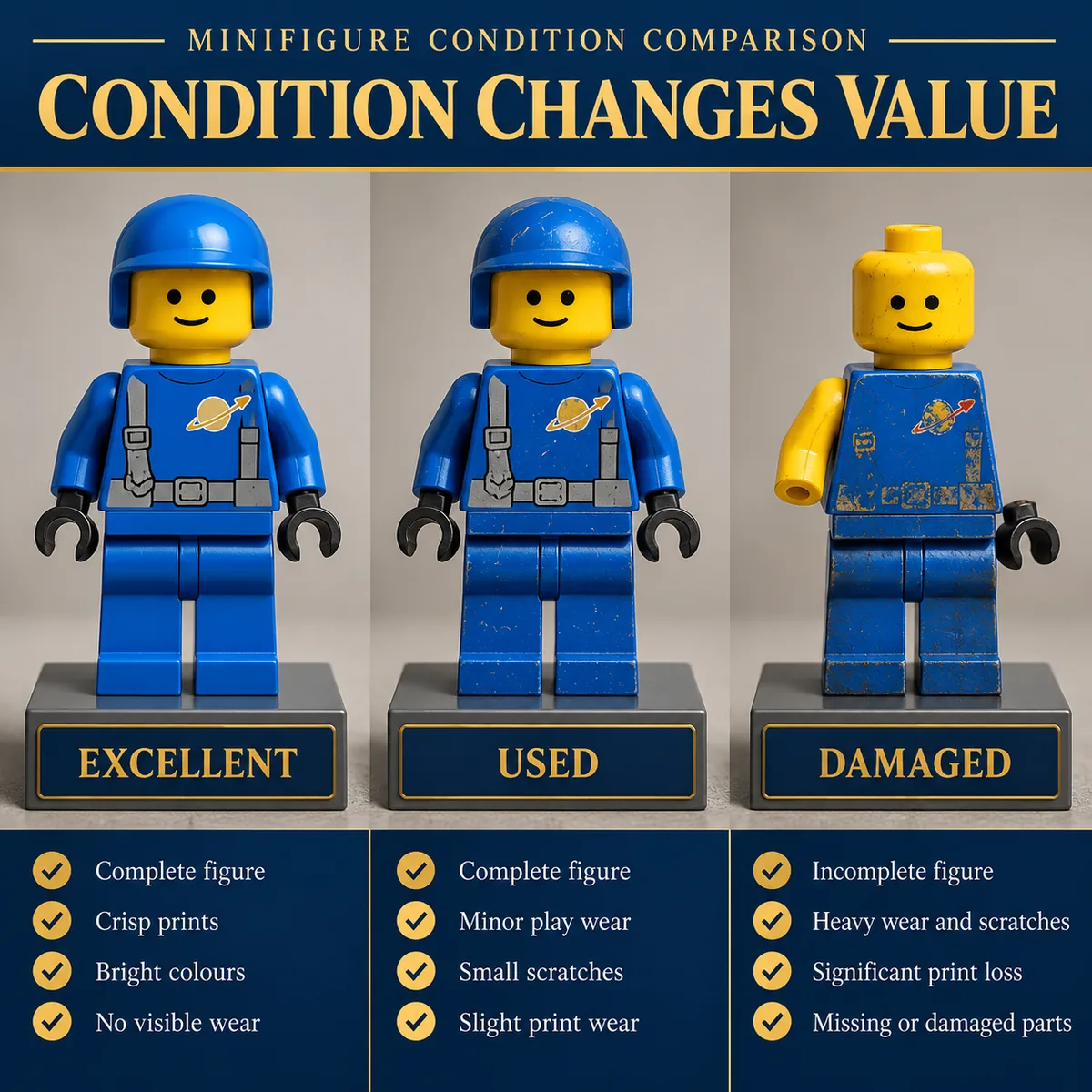
- Separate condition and completeness. Note cracks, loose joints, fading, discoloration, missing parts and whether the figure is sealed or loose. Record special accessories separately if you are unsure whether they belong with it.
- Open the same figure’s price history. Use the BrickLink Price Guide explanation to understand its recent-sale and current-listing sections. Compare used to used and new to new.
- Look at the number of sales as well as the average. A high average built from one unusual transaction is less persuasive than a similar range supported by repeated sales. If there are only a few sales, describe the estimate as uncertain.
- Save a dated range, not a promise. Write down the source, date, condition and recent range you observed. Recheck when you are ready to sell because the market and the available comparisons can change.
If you do not know the figure number, use the photo identification tool to get a catalog candidate, then confirm it manually. For a fuller walkthrough of condition, rarity and price checks, read the LEGO minifigure price guide. Identification is not an authenticity certificate, and a market estimate is not an appraisal or guaranteed payout.
FAQ: valuable LEGO minifigures
What is the most valuable LEGO minifigure?
The brick’em ranking checked on October 2, 2026 places Mr. Gold, Series 10 (col161) first at $4,590.42. brick’em says its list uses a six-month average of completed BrickLink sales. That is a dated source estimate, not a guaranteed price for a specific figure; verify the variant and current sale history.
Are the rarest LEGO minifigures always the most valuable?
No. A rarity list may count set appearances or catalog owners, while a value list ranks a price measure. Demand, condition, completeness and recent sales still matter. A one-off catalog appearance does not establish a dependable sale price if very few buyers are looking for it.
What is the rarest LEGO minifigure in the world?
There is no single answer without naming a rarity measure. Some lists count catalog appearances or reported ownership; this page ranks a publisher's value snapshot instead. Use a scarcity ranking that explains its method, then check completed sales separately if you want a price estimate.
What is the most expensive Star Wars LEGO minifigure?
Among the first ten entries in the October 2, 2026 brick’em snapshot on this page, the New York Yoda (sw0465a) is the highest Star Wars-related entry at $2,188. That is one cross-theme list snapshot, not a complete Star Wars-only ranking or a guaranteed sale price.
Are any early 2010s LEGO minifigures worth money?
Several 2012 and 2013 examples appear in the first ten entries of the dated source snapshot, including Mr. Gold (2013) and the Iron Man Model 37 Toy Fair exclusive (2012). Their listed amounts are source estimates; confirm the exact catalog version, included parts and recent sales before valuing a specific figure.
Why is a Darth Vader LEGO minifigure expensive?
Some versions may be worth more because of their release, prints, parts, condition or demand. The character name alone does not set the value: compare the exact catalog version and use recent sales for that version rather than a different Darth Vader.
How can I check a LEGO minifigure’s current value?
Confirm the catalog ID, separate new and used condition, and compare recent completed sales with the number of transactions. Keep current listings separate from sold data, then note the date and source so the estimate can be checked later.
Do accessories and condition change a minifigure’s price?
They can. A missing cape, helmet, weapon or printed part may make the comparison incomplete. Cracks, fading and loose joints also matter. Compare a figure with the same included parts and condition before using a reference price.
Is the highest BrickLink listing the real value?
No. It is an asking price. Review past sales and the sales count for a more grounded reference, then consider active listings as additional competition. Neither source guarantees what a specific figure will sell for.
Sources and method notes
- brick’em: 100 Most Valuable LEGO Minifigures — states that its rankings use six-month averages of completed BrickLink sales; names and values checked October 2, 2026.
- BrickLink Help: Price Guide — explains the difference between past sales and current listings and describes its sale-count and average fields.
- Baumlinks: Rarest LEGO Minifigures — a catalog-scarcity ranking, not a sale-price guide.
LEGO is a trademark of the LEGO Group, which does not sponsor or endorse this site. The illustrations accompanying this guide are editorial concepts, not catalog photographs or official LEGO product images.
Use the list as a research starting point
A headline value can make a figure worth investigating, but the exact release, condition and sales evidence determine whether that comparison applies to the minifigure in your hand. Confirm the ID, check completeness, and write down the source and date before setting a price.
Identify a minifigure